
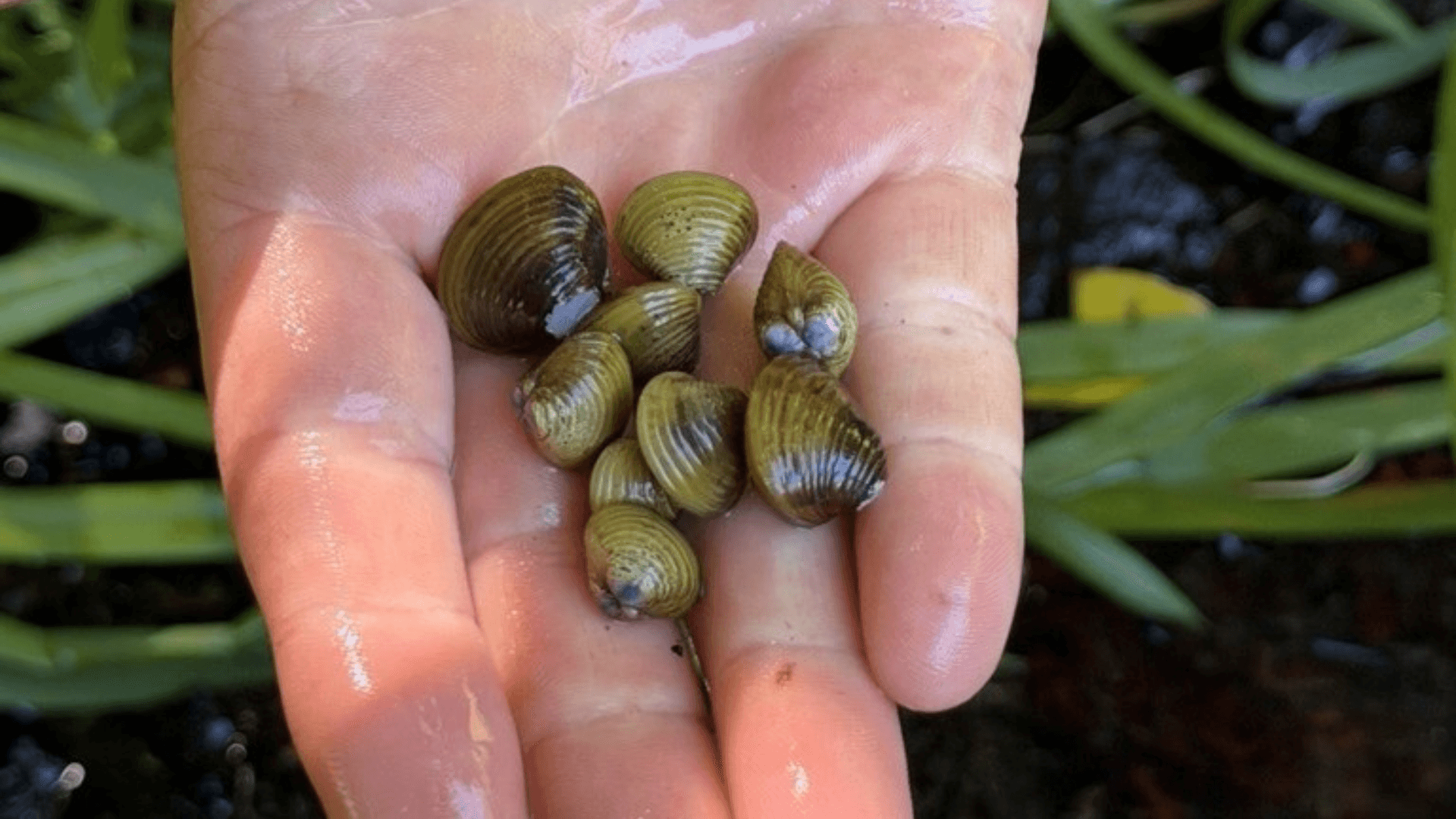
Gold clam discovery raises concern for wider Waikato River catchment and Taupō moana
Taupō Moana is Our Taonga: Tūwharetoa Calls for Collective Action to Protect Our Waters
Tūwharetoa Māori Trust Board is highly concerned following confirmation of invasive freshwater clams (Corbicula, likely fluminea) at Ātiamuri Hydro Station on the Waikato River – the first confirmed detection outside the current controlled area upstream from Whakamaru Dam.
The discovery represents a significant development in the ongoing response to invasive freshwater clams in the Waikato River system and reinforces the need for vigilance to protect the health and integrity of the wider catchment, including waters of importance to Tūwharetoa.
The route by which the clams reached Ātiamuri is not yet known. A survey is underway to establish the extent of the area, with Waikato Regional Council, Biosecurity New Zealand, Waikato River iwi and other partners working together to understand the spread and coordinate the response.
Tūwharetoa Māori Trust Board Chief Executive, Rakeipoho Taiaroa, says the discovery reinforces the importance of staying vigilant, and protecting the waters that sustain our people and future generations.
“Taupō moana and the Waikato awa are taonga tuku iho and are of immense significance to Tūwharetoa. Our relationship with these waters is grounded in whakapapa and carries a responsibility to protect their mauri for generations to come.
“While the latest detection is at Ātiamuri, it is a reminder that the health of our waterways is connected. We need to understand the extent of this incursion, take the necessary steps to prevent further spread and ensure tangata whenua are appropriately involved in decisions that may affect their waters.”
Protecting our waterways requires collective action
Freshwater clams can reproduce rapidly and establish large populations in a short period of time. Once established, they are extremely difficult to control and can create long-term risks for native species, water infrastructure and the wider economy.
Juvenile clams can be smaller than a grain of sand, making them difficult to see and easy to transport unknowingly. Boats, trailers and recreational equipment can carry microscopic juveniles and contaminated water between waterways.
Tūwharetoa Māori Trust Board is urging all whānau, recreational users and commercial operators to follow the Check, Clean, Dry guidance every time they leave a waterway.
This includes:
- Check: Remove visible weeds, mud and clams from boats and equipment, and drain all water beside the waterway.
- Clean: Thoroughly wash boats and equipment with tap water, ensuring wash water does not enter stormwater drains.
- Dry: Allow equipment and watercraft to dry completely, then leave for at least 48 hours before using them in another waterway.
Ballast tanks are a particular risk because they can retain water containing microscopic juvenile clams. Boaties are encouraged to take extra care and, where possible, avoid moving vessels between waterways.
Staying informed and protecting Taupō moana
The Tūwharetoa Māori Trust Board will continue working with Biosecurity New Zealand, Waikato Regional Council, iwi partners and relevant agencies to understand the implications of the discovery and support a coordinated response.
The extent of the incursion and any implications for other waterways, including Taupō moana, are still being assessed. No detection in Taupō moana is being reported at this stage.
Tūwharetoa Māori Trust Board will continue to seek timely information and appropriate mana whenua involvement as the response develops.
Whānau who suspect they have found invasive freshwater clams should not move or collect them. Take a photograph if possible, note the location and report the sighting to Biosecurity New Zealand on 0800 809 966 or through report.mpi.govt.nz.
Further information on Check, Clean, Dry requirements is available through Biosecurity New Zealand.
Our waters are a taonga. Protecting them is a shared responsibility, and every action to prevent further spread matters.
ENDS
Media contact:
Delilah Parore-Southon
Senior Communications Advisor
Tūwharetoa Māori Trust Board
Delilah@tuwharetoa.co.nz
+64 22 173 8239
Further information:
For the latest biosecurity advice and Check, Clean, Dry guidance, visit Biosecurity New Zealand: https://www.mpi.govt.nz/biosecurity